
Overview of the Operation
On January 3, 2026, the United States government carried out a military operation aimed at
removing Nicolas Maduro from
stand trialment of Venezuela. During this operation, Maduro and his wife were apprehended
and
subsequently transported to
New York to stand
trial.
On January 6, 2026, the US government announced that Venezuela would initially transfer between 30 and 50 million barrels of high-quality, sanctioned oil to the United States. The money proceeding for such barrel sales would be managed by the US president at the discretion of the US government. According to the US Department of Energy, the oil sales will continue indefinitely.
Venezuela's Oil and Energy Landscape
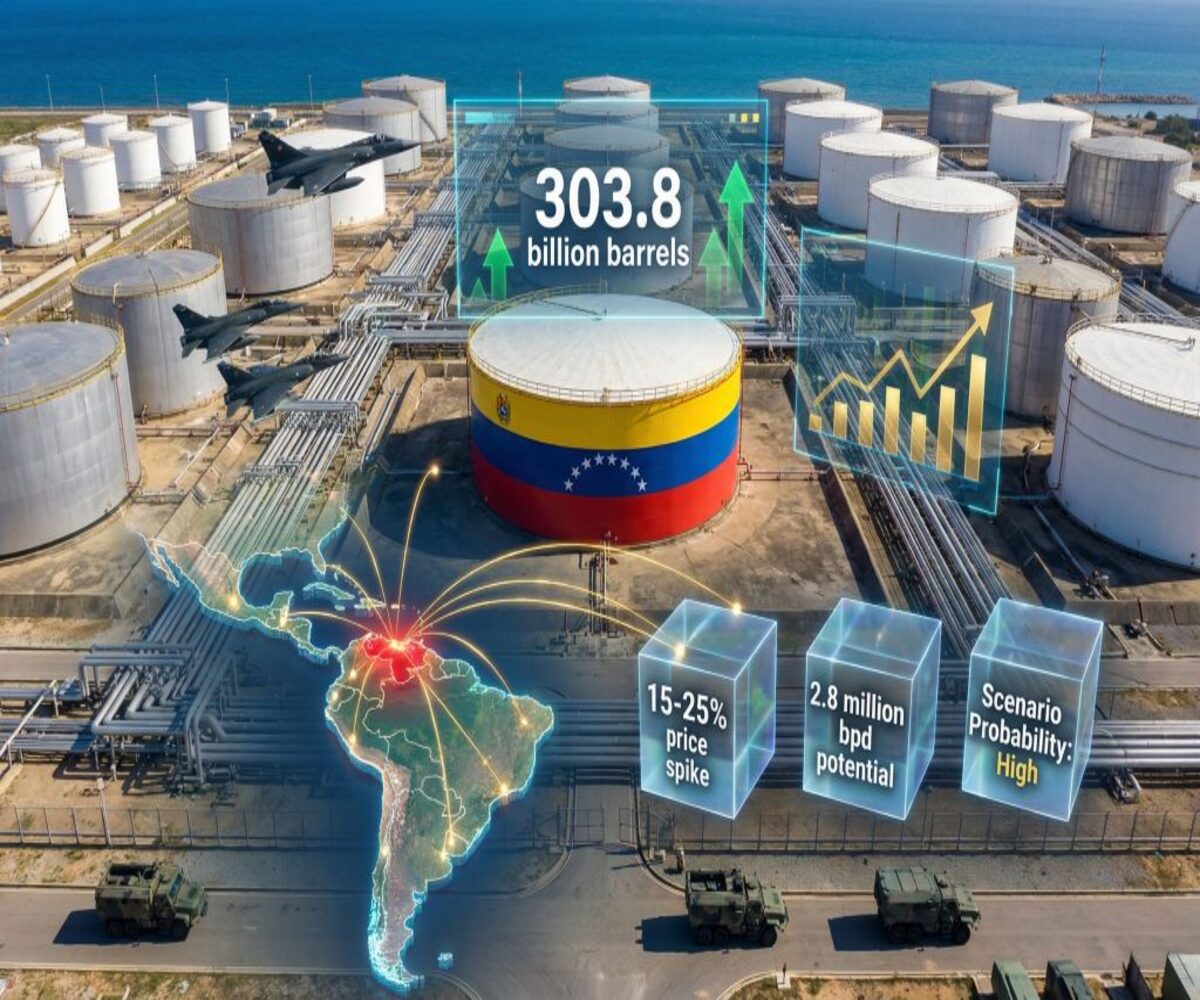
Venezuela holds significant oil reserves of 303 billion barrels
(approximately 17% of global reserves), making it a key player in global energy.
China is Venezuela’s primary oil buyer and creditor. The exports to China at some percentages are allocated to the repayment of debt. Yet the Latin American country also has a pushing presence of US company Chevron, as the company has increased naphtha and condensate shipments to projects operated with state oil company Petróleos de Venezuela SA (PDVSA) in the country.
Recent US measures require all Venezuelan oil exports to use channels approved under US law, according to the US Department of Energy.
Legal Standpoint:
Experts have argued that the US military intervention of Venezuela violates the prohibition on the use of force enshrined in Article 2(4) of the United Nations Charter.
Additionally, external control of foreign powers' oil production or revenues following a military intervention raises questions about violations of state sovereignty, non-intervention, and the right of peoples to freely dispose of their natural wealth. In this sense, the military intervention can be read as also a violation of the right of people to self-determination and sovereignty over natural resources. This claim relies on Article 1 of the International Covenant on Civil and Political Rights, which the United States ratified in 1992.
Potential Consequences:
The United States' military intervention in Venezuela has complex effects, especially on the energy sector and regional markets, with outcomes that remain uncertain. From a sustainability perspective, the following areas require close monitoring:
Human Rights: The intervention introduces significant uncertainty regarding Venezuela’s political stability as Venezuelans is one of the world’s largest displacement contexts, with millions needing protection and support inside and outside the country. Political instability, followed by institutional fragility after an external military intervention may affect the enjoyment of Venezuelan people's civil, social and economic rights.
Institutional Vulnerabilities: Existing political and economic challenges may be exacerbated, affecting access to essential public services such as healthcare, food, energy, and water.
Energy Transition and Sustainability: The intervention is a strong signal that, despite climate commitments, fossil fuels remain central to great-power strategy. This introduces additional volatility into energy markets, affecting oil supply and investment signals for renewable energy. Geopolitical tensions linked to the intervention have also driven up demand for traditional safe-haven assets such as gold.
Energy Investment in the Region: The oil intervention may raise geopolitical risks for future Chinese investments in Latin America’s mining, energy, and infrastructure sectors. Particularly related to imports of copper, lithium, iron ore and other raw materials based on Latin America which are essential for the development of other energy sources.
Oil Markets and Operation: Oil operations in Venezuela affect both humanitarian conditions and global markets. The industry depends on processing extra-heavy crude, posing economic, environmental, and technological challenges. External intervention could boost oil supply by increasing control over production and exports, potentially shifting market dynamics and influencing stakeholder interests, revenue distribution, and resource allocation.
Sources:
Country Analysis Brief: Venezuela https://www.eia.gov/international/content/analysis/countries_long/Venezuela/pdf/venezuela_2024.pdf
Expert Comment: The illegality of the US attack against Venezuela is beyond debate - how the world reacts is critical https://www.ox.ac.uk/news/2026-01-07-expert-comment-illegality-us-attack-against-venezuela-beyond-debate-how-world-reacts?
Expert Comment: The illegality of the US attack against Venezuela is beyond debate - how the world reacts is critical https://www.ox.ac.uk/news/2026-01-07-expert-comment-illegality-us-attack-against-venezuela-beyond-debate-how-world-reacts
FACT SHEET: President Trump is Restoring Prosperity, Safety and Security for the United States and Venezuela. https://www.energy.gov/articles/fact-sheet-president-trump-restoring-prosperity-safety-and-security-united-states-and
How Should Business Leaders Respond to the U.S. Military Operation in Venezuela? https://insights.som.yale.edu/insights/how-should-business-leaders-respond-to-the-us-military-operation-in-venezuela
International Covenant on Civil and Political Rights https://www.ohchr.org/en/instruments-mechanisms/instruments/international-covenant-civil-and-political-rights
Investors Evaluate Developments in Venezuela https://www.morganstanley.com/insights/articles/market-implications-us-intervention-venezuela
UN experts condemn US aggression against Venezuela https://www.ohchr.org/en/press-releases/2026/01/un-experts-condemn-us-aggression-against-venezuela
CGSL is a nonprofit initiative working at the intersection of law & sustainability. We advance legal research, policy formulation, and collaboration to support a just, resilient, and sustainable world.
© CGSL | DevForge CC